
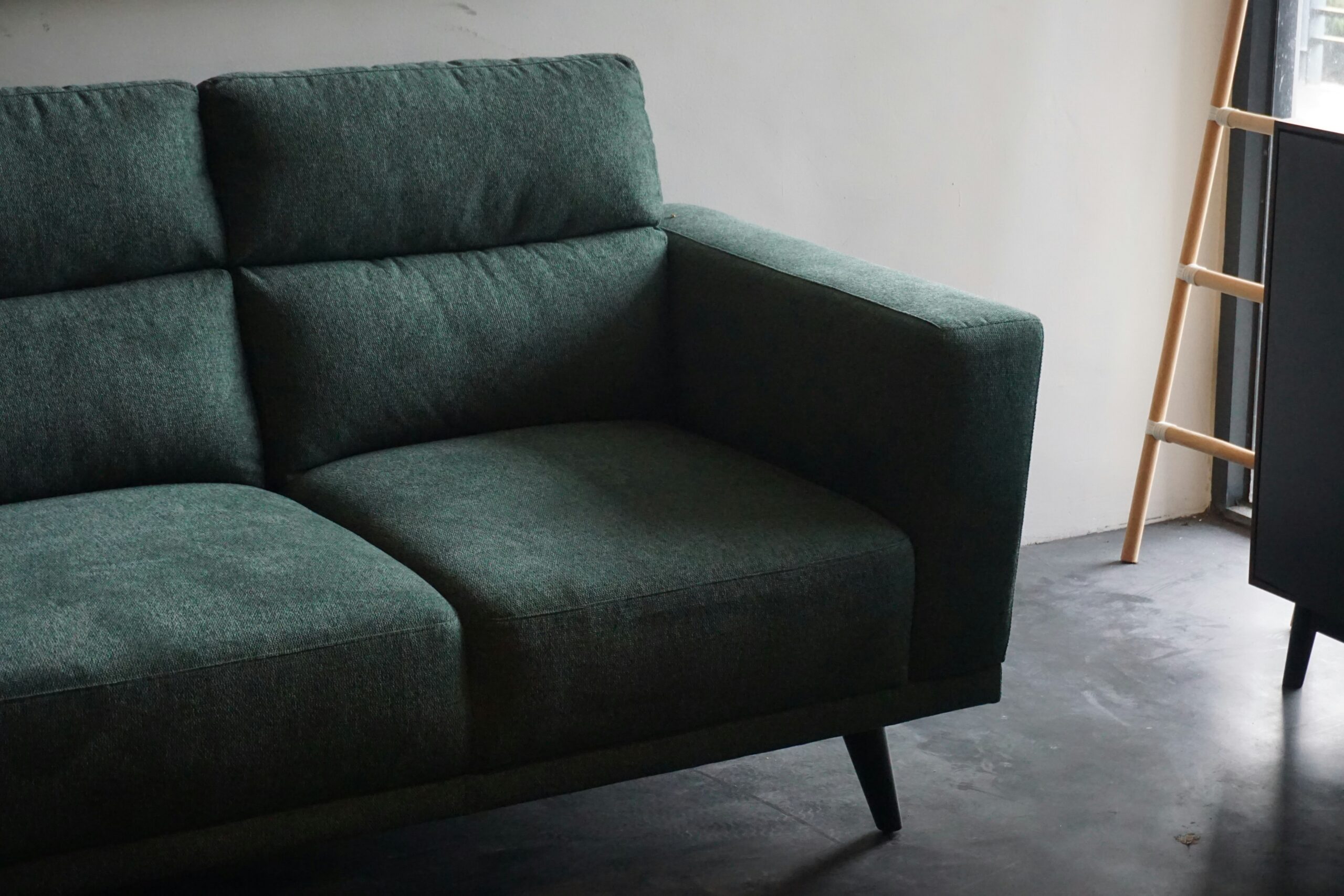
Buying an MCM sofa is one of the bigger purchases you’ll make furnishing a room — usually the visual anchor, usually the most expensive single piece, and usually the one you’re stuck with the longest if it turns out wrong. Product photos make almost every sofa look good. The differences that actually matter show up in the specs most listings bury, downplay, or skip entirely.
Ask these five questions before you check out, not after the return window has closed.
1. What’s the Frame Made Of?
This is the single most important spec on the entire piece, and the one most listings are vaguest about. A solid wood frame — even a hardwood plywood frame with real joinery — will outlast a particleboard or low-grade softwood frame by years, especially at stress points like arm joints and leg attachments. “Wood frame” on its own tells you almost nothing; ask specifically whether it’s solid wood, plywood, or particleboard, and if the answer is evasive, that’s itself an answer. This is exactly the kind of detail we look for first in any review — in our Cronus Modular Sofa review, the solid wood frame held up with zero wobble at the modular joints even under direct pressure, which is precisely the test a particleboard frame tends to fail.
2. What Fills the Cushions?
Cushion fill determines both how a sofa feels on day one and how it feels three years from now. High-density foam holds its shape longest but can run firm; a down blend feels plush immediately but compresses faster over time unless it’s paired with a supportive core; spring-based construction (pocket coils or webbing) tends to offer the best long-term support but adds cost. None of these is objectively “best” — it’s a real tradeoff based on how you actually want to sit — but a listing that just says “comfortable cushions” with no fill spec is asking you to guess.

Photo: James Lee / Unsplash. Featured image: Syahrin Seth / Unsplash
3. How Much Assembly Is Required?
“Assembly required” can mean attaching four screw-in legs in five minutes, or connecting multiple modular sections with hardware, a hex key, and a second person to help lift. Ask specifically what’s involved and what tools you’ll need before delivery day, not after the box is sitting in your hallway. This also matters for weight: a large sectional or modular sofa can easily clear 300–400 lbs fully assembled, which affects both how many people you need on hand and how it gets through doorways and stairwells.
4. What’s the Warranty and Return Window?
A retailer confident in their construction backs it with a real warranty — typically one to five years on frame and structure for a well-made piece. A vague “satisfaction guarantee” with no specific warranty length is worth asking about directly. Equally important: how many days do you actually have to return it once it’s in your home and you’ve sat on it for a week? Photos and showroom visits only tell you so much; a generous return window is what lets you find out the rest.
5. Can You Sit in It, or Only See Photos?
Seat depth, cushion firmness, and back support are things no photo can tell you. A sofa that looks identical to one you loved somewhere else can feel completely different depending on seat depth alone — a deep lounging seat is fantastic for stretching out and can be genuinely uncomfortable for someone who wants to sit upright with their feet flat on the floor. If there’s a showroom near you, sit in it before you buy. If there isn’t, look for a retailer with a real return policy and treat the first week as your in-home showroom visit.
Buying an MCM Sofa: The Bottom Line
None of these questions require expertise, just the willingness to ask before you buy instead of finding out after. A retailer selling a genuinely well-made sofa will usually be eager to answer all five in detail — it’s the ones dodging specifics who are worth a second look.