
Knowing how to tell if rattan furniture is real matters more than most shoppers realize — product photos alone make it genuinely hard to tell the two apart. Rattan and cane furniture never really left the mid-century modern lexicon, and it’s having a very obvious moment again: woven headboards, pendant lights, dining chairs, the works. Real rattan has been prized for exactly this look since the 1950s and ’60s, woven from a natural palm vine that grows across Southeast Asia. But a lot of what’s sold today as “rattan” or “wicker” is actually synthetic resin engineered to imitate it convincingly.
That’s not always a problem — synthetic resin wicker has real advantages for outdoor use, since it doesn’t degrade in weather the way natural rattan does. The problem is only when it’s sold as the real thing, or when you specifically want natural material and end up with plastic instead. Here’s how to tell which you’re looking at.
Table of Contents
1. Check for Natural Color Variation
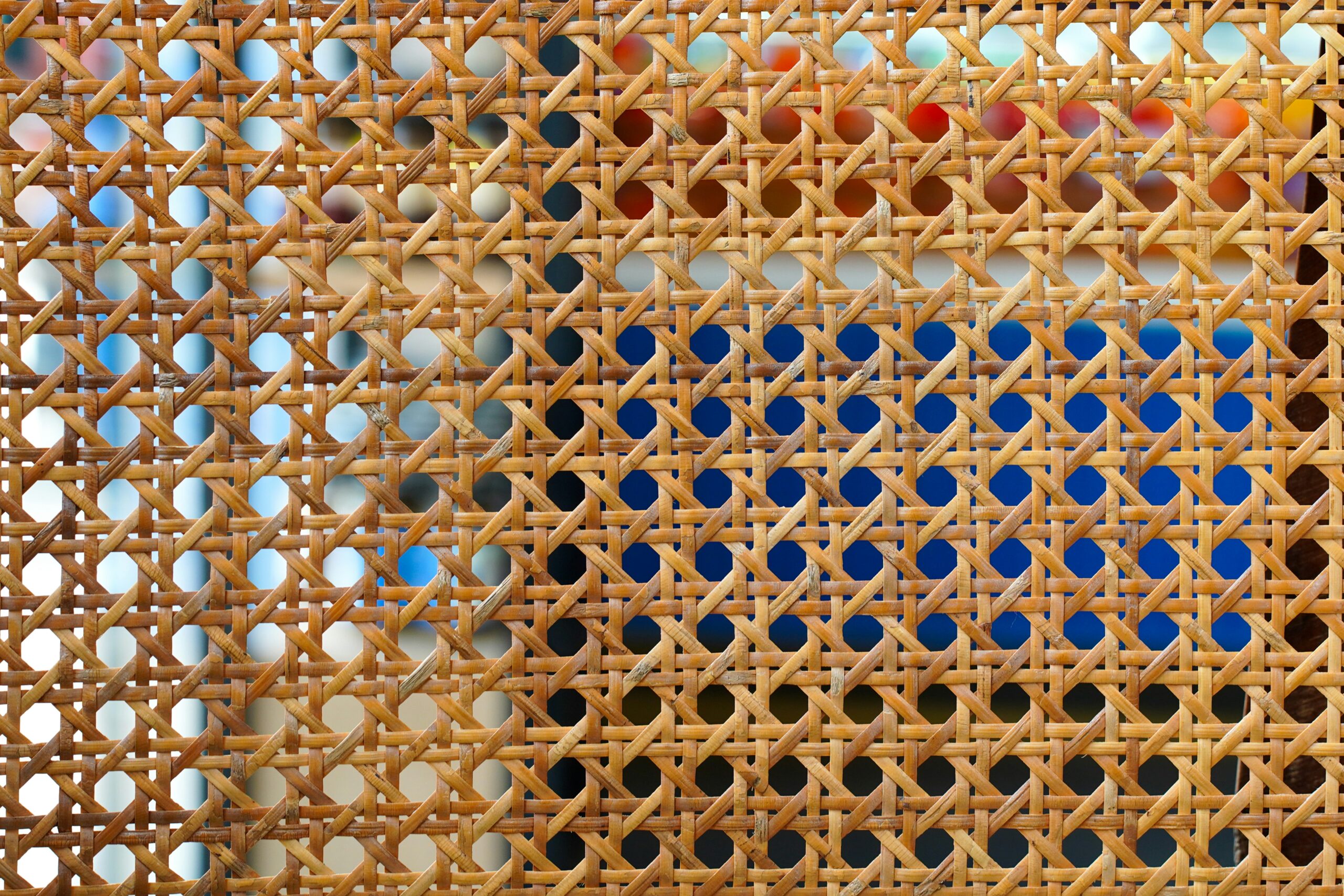
Real rattan comes from a palm vine (see rattan on Wikipedia for more on the material itself), and no two strands are perfectly identical — you’ll see subtle shifts in tone, slightly darker knots where the vine had nodes, and small natural imperfections along the length of each strand. Synthetic resin wicker is extruded to a uniform spec, so it tends toward a flatter, more consistent color across the entire piece. A weave that looks almost too evenly toned, especially under close inspection, is a strong signal it’s synthetic.
2. Test the Weight and Rigidity
Natural rattan is lightweight but genuinely rigid — it holds its shape and has a certain snap to it when flexed slightly. Synthetic resin strands often feel more rubbery or hollow, with more give than real cane. If you can pick up a piece or press gently on an unseen part of the weave, real rattan resists in a way synthetic usually doesn’t.
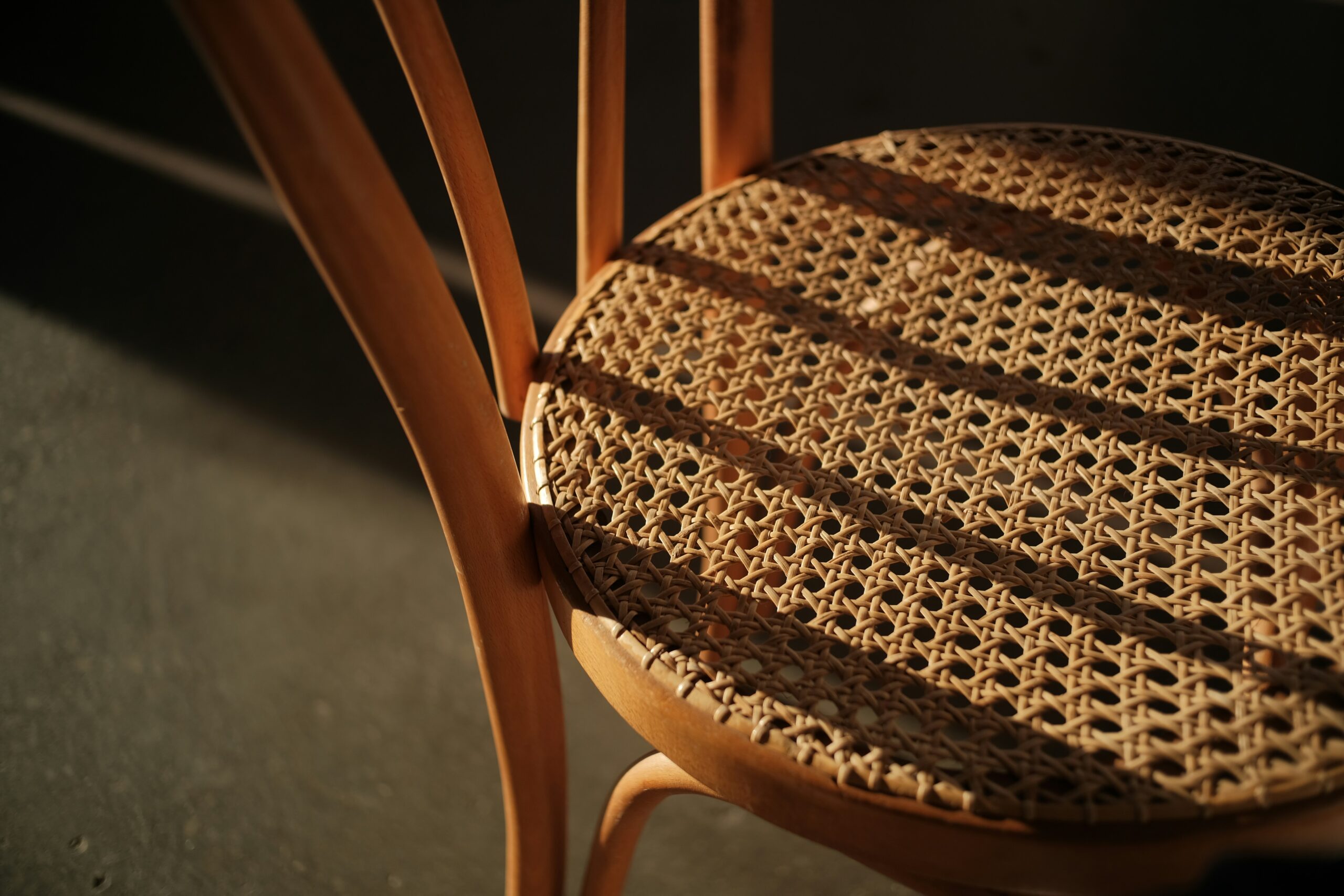
Photo: Allen Y / Unsplash. Featured image: Vaibhav Surana / Unsplash
3. Look Closely at the Weave Pattern
Hand-woven natural rattan has small, genuinely natural irregularities — a strand that’s very slightly wider than its neighbor, a weave that’s not machine-perfect from every angle. Machine-manufactured synthetic wicker is usually woven by equipment built for exact repetition, so the pattern tends to look flawless and identical at every point. Ironically, the “too perfect” weave is the tell, not the imperfect one.
4. Trust Your Nose
This one only works in person, but it’s reliable. Natural rattan has a faint, genuinely earthy, slightly grassy smell, especially on a newer piece or in a warm room. Synthetic resin can carry a faint plasticky smell instead, particularly right out of the box or in direct sun. It’s subtle, but if you’ve handled both before, the difference is noticeable.
5. Consider Where It’s Going to Live
This is less a way to identify what you have and more a way to decide what you actually want. Natural rattan needs to live indoors, or at minimum somewhere sheltered and sealed, since direct sun and rain will dry it out, crack it, or rot it over time. Synthetic resin wicker is specifically built to handle exactly that kind of exposure. If a piece is headed for a porch or patio that gets real weather, synthetic isn’t a compromise — it’s often the smarter material choice, regardless of what looks more “authentic” in photos.
How to Tell if Rattan Furniture Is Real: The Bottom Line
Neither material is inherently better — they’re suited to different jobs, and the only real mistake is paying real-rattan prices for synthetic, or putting natural rattan somewhere it can’t survive. Knowing which one you’re looking at, and choosing on purpose, is the whole game.
The same principle applies across mid-century materials generally, not just rattan — see our guide to spotting real walnut vs. veneer for the wood-furniture version of this same check.