

The Eames lounge chair is probably the single most recreated piece of furniture in the mid-century modern world — for good reason, given the authorized original lists for roughly $7,000 and up. Dozens of brands sell an Eames chair replica somewhere between roughly $600 and $1,600, and the range in actual build quality inside that bracket is enormous. Some recreations are genuinely well-made pieces in their own right. Others are the same silhouette wrapped around corner-cut construction that won’t survive five years of daily use.
Here’s how to tell which one you’re looking at, whether you’re shopping in a showroom or scrolling product photos.
1. Seams Show Through the Veneer
The original Eames shell is molded plywood, and a well-made recreation follows the same approach: one continuous piece of veneer wrapping the curved shell, laid so the wood grain flows unbroken from one edge to the other. On a cheaper build, you’ll often spot a visible seam where two pieces of veneer meet, or a place where the grain direction abruptly changes. It’s easiest to see in raking light along the curve of the backrest — tilt the chair or the photo and look for a line that shouldn’t be there. This is the same core check we cover in more depth in spotting real walnut vs. veneer generally, applied specifically to a molded shell.
2. The Star Base Flexes or Wobbles
The five-point aluminum base is a structural piece, not a decorative one — it’s what the entire chair pivots and rests on. On a well-cast base, the swivel is smooth and the chair feels planted with no give. On a cheaper casting, you’ll feel a slight flex or hear a faint creak when you shift your weight, especially leaning to one side. If you can, put a hand on the base and rock the chair gently — any looseness at the swivel joint is a red flag for how the whole chair will hold up over time.
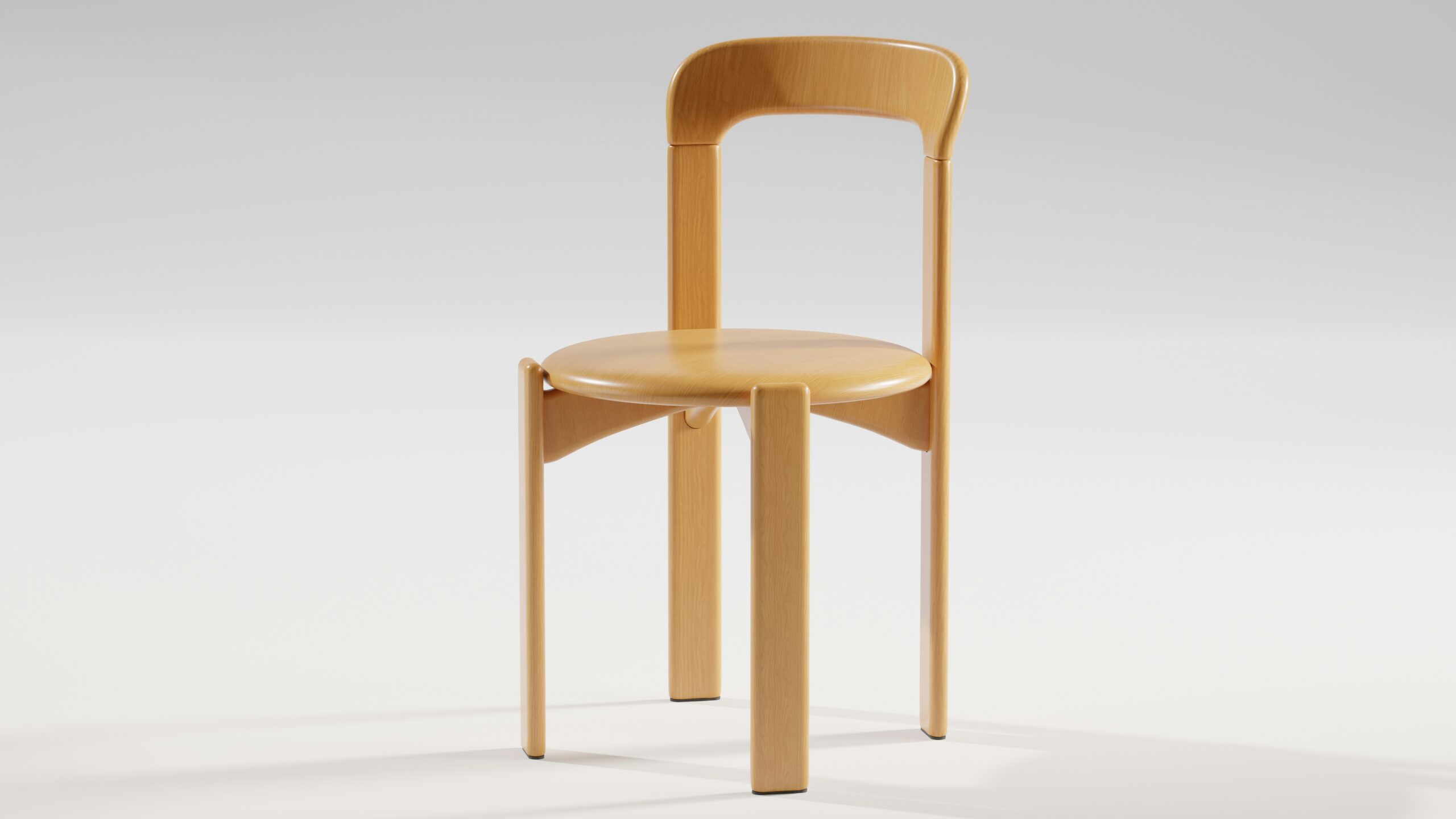
Photo: ObjectType RAW / Unsplash. Featured image: Clay Banks / Unsplash
3. Cushions Bottom Out Within Seconds
Sit in it for longer than the thirty seconds most showroom visits allow. A well-cushioned recreation has real support underneath the top layer of foam or down and holds its shape as you settle in. A cheaper one compresses almost immediately down to a thin layer with nothing underneath, and you’ll feel the shell of the chair through the cushion within the first minute. This is one of the few checks that genuinely requires sitting in the piece rather than looking at it — a photo will never show you this.
4. Bolts and Fasteners Are Visible
On the original and on good recreations, the shell attaches to the base with hardware that’s largely hidden — recessed, capped, or tucked beneath the seat where you don’t see it in normal use. On a cheaper build, exposed bolt heads, visible washers, or mismatched hardware finishes are common, since hiding fasteners properly costs more in manufacturing. Check the underside of the seat and where the shell meets the base.
5. No Wood Species, Weight Rating, or Warranty Listed
This is the check you can do before you ever see the chair in person. A retailer confident in their construction will tell you the wood species used for the veneer, the weight capacity, and back it with a real warranty. A listing that just says “premium wood” or “durable construction” with no specifics is often hiding the fact that the answer wouldn’t sound impressive. Ask directly if the listing doesn’t say — the response, or lack of one, tells you plenty.
Eames Chair Replica: The Bottom Line
None of this means every recreation under $2,000 is a bad buy — plenty of brands in that range build a genuinely solid chair. It just means the silhouette alone tells you nothing about what’s underneath it, and a few minutes of actually checking is the difference between a chair that lasts and one that doesn’t.